
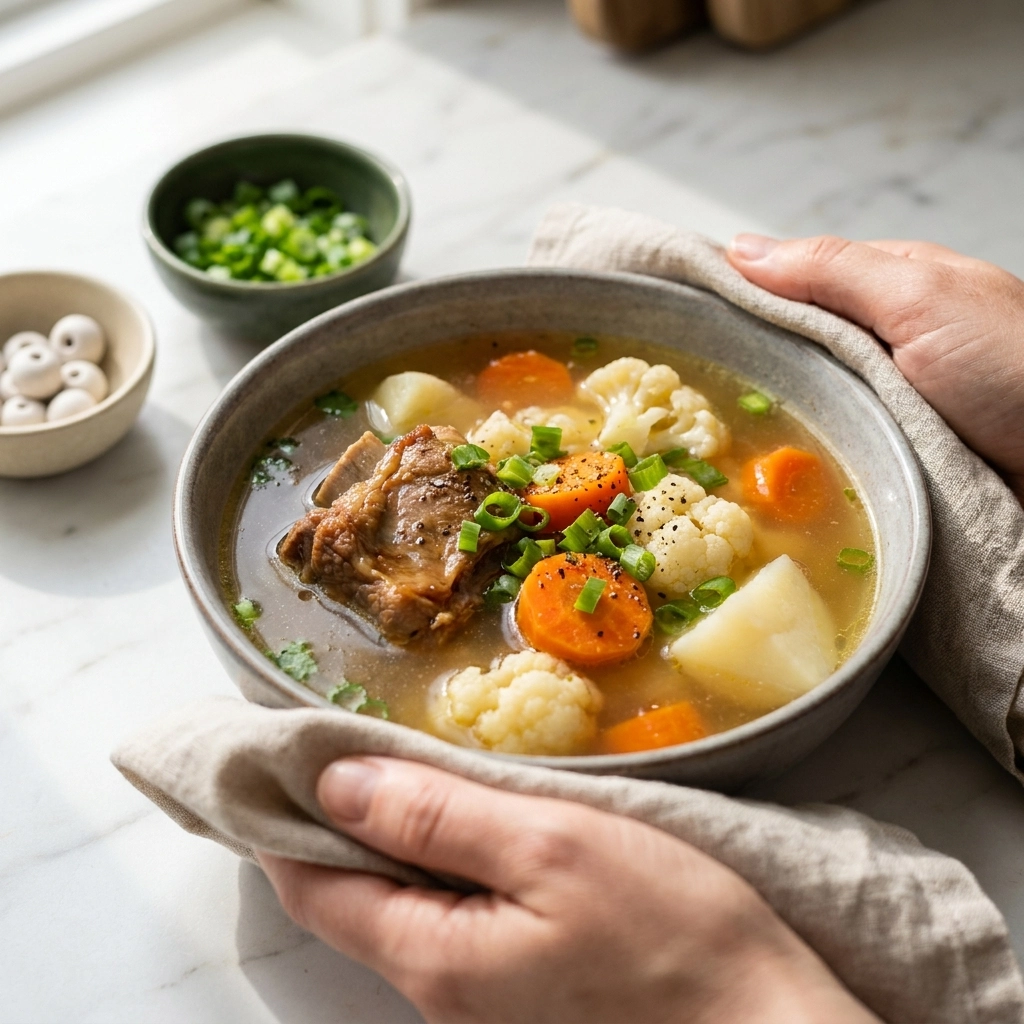
A Hug in a Bowl |
Imagine a Tuesday evening in late November when the rain is drumming against the glass and the house feels just a bit too chilly. I always crave something that doesn’t just fill my stomach but actually warms my soul, and that is exactly when I pull out the big heavy pot for some rib soup. It is the kind of meal that transforms a gloomy afternoon into a sanctuary of steam and scent.
My favorite part of this experience is the wild texture contrast. You get these silky, melt-in-your-mouth pieces of pork that practically dissolve, paired with the slight, satisfying snap of fresh carrots and the hearty chew of root vegetables. It is a symphony of softness and bite that keeps every single spoonful interesting until the pot is completely empty.
- ●The bone-in ribs create a depth of flavor that boneless meat simply cannot replicate.
- ●It is a one-pot wonder, meaning less cleanup after a long day of work.
- ●Perfect for freezing in batches to ensure you always have a nutritious lunch ready.
- ●The broth is naturally rich in collagen, giving it a luxurious, lip-smacking quality.
- ●It is incredibly forgiving, allowing you to toss in whatever seasonal veggies you have on hand.
Essential Ingredients |
Pork Spare Ribs act as the foundation because the connective tissue and marrow break down slowly, releasing gelatin that thickens the broth and adds a creamy mouthfeel.
Fresh Ginger contains gingerol, which provides a spicy heat and acts as a digestive aid while cutting through the richness of the pork fat.
Carrots introduce natural sugars through caramelization, which balances the salty notes of the broth and adds a vibrant, earthy sweetness.
Garlic is essential for its sulfur compounds, which create that pungent, savory aroma and deep umami base that anchors the entire soup.
Soy Sauce provides more than just salt; the fermentation process creates complex amino acids that enhance the ‘meatiness’ of the pork.
Celery contributes a subtle, herbal bitterness and high water content that helps keep the vegetables tender without becoming mushy.
Let’s Make it Together |
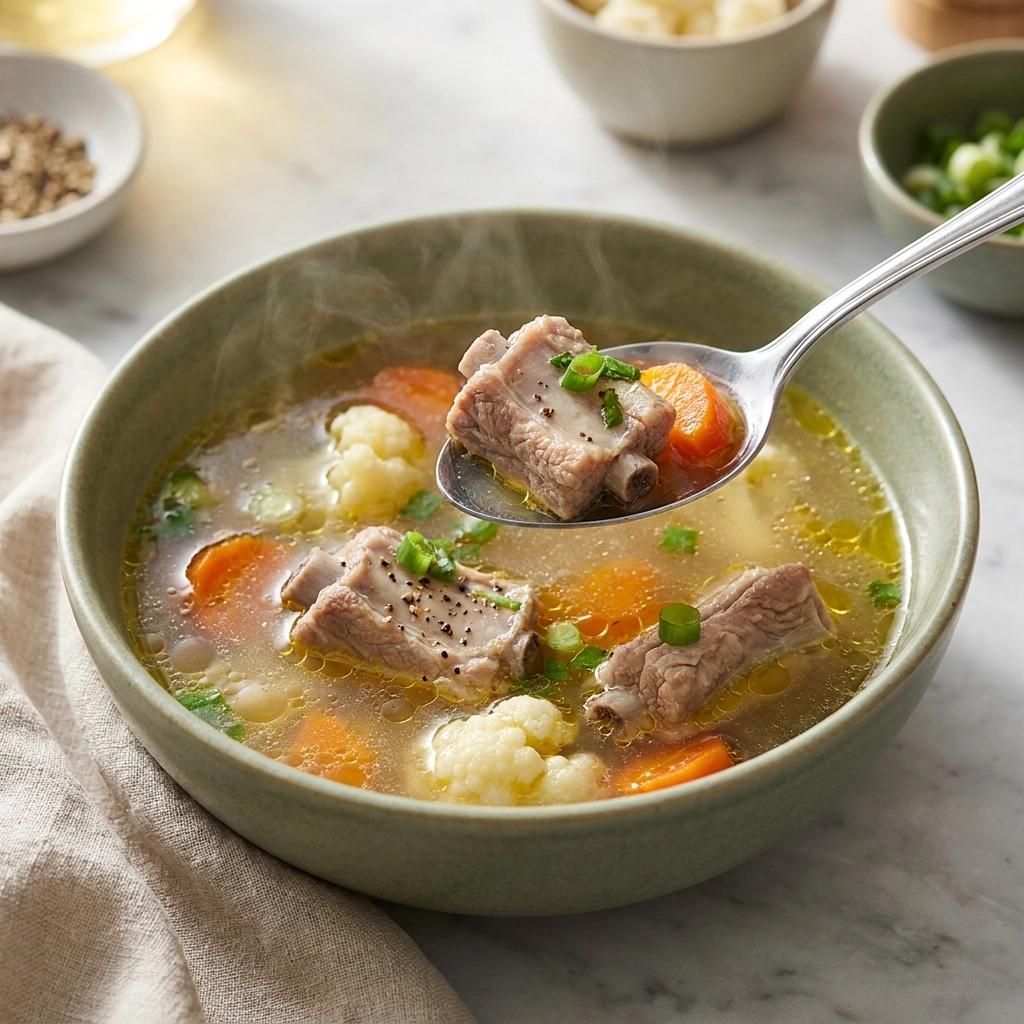
- To lock in the juices and build a flavor base, sear the ribs in a hot pot until browned on all sides.
- To release the aromatic oils and fragrant scents, sauté the minced garlic and ginger in the leftover pork fat for about two minutes.
- To remove any burnt bits and create a savory deglaze, pour in a splash of water and scrape the bottom of the pot.
- To ensure a deep, slow extraction of minerals and marrow, cover the meat with water and simmer it gently for ninety minutes.
- To add sweetness and structural variety, stir in the sliced carrots and celery during the last twenty minutes of cooking.
- To achieve a perfectly balanced taste, stir in the soy sauce and a pinch of pepper right before turning off the heat.
Always skim the grey foam from the top of the broth early on.
Avoid boiling the soup vigorously or the meat will toughen.
Using a heavy-bottomed pot prevents the vegetables from scorching.
Keep the heat low once the liquid reaches a simmer.
Do not add salt until the very end of the process.
Perfecting the Cooking Process |
Temperature control is the secret weapon here. You want a ‘lazy bubble’—where the liquid barely dances—rather than a rolling boil. This gentle heat ensures the collagen in the ribs converts to gelatin without tightening the muscle fibers, which keeps the meat tender.
Timing is equally critical. If you rush the ribs, they will be chewy; if you overcook the carrots, they disappear. I usually time my vegetable additions based on their density, adding the hardest roots first and the softest greens last.
Add Your Touch |
If you want a bit more punch, try adding a tablespoon of miso paste at the end. It adds a funky, fermented depth that makes the soup taste like it has been simmering for three days instead of two hours.
For a heartier meal, throw in some cubed daikon radish or chunks of potato. You could even swap the pork for beef short ribs if you prefer a heavier, darker flavor profile.
Storing & Reheating |
In the fridge, this soup stays fresh for up to four days in an airtight container. I recommend cooling it completely before sealing it to prevent condensation, which can make the vegetables soggy and ruin that precious texture contrast.
For the freezer, use individual portions in freezer-safe bags for up to three months. When reheating, do it slowly on the stove over medium-low heat; adding a splash of water or broth prevents the soup from becoming too salty as it reduces.
1Pat the ribs completely dry before searing to get a better crust.
2Use a kitchen string to tie ribs together for easier handling.
3Always taste your broth before adding the final seasoning.
4Remove the ribs to shred the meat if you prefer a thicker stew.
5Store the broth and solids separately for maximum freshness.
FAQ |
- ●Q: Can I use a slow cooker for this?A: Absolutely, and it actually works beautifully. Just sear the meat in a pan first for flavor, then set your slow cooker to low for 7-8 hours, adding the vegetables in the final two hours to prevent them from overcooking into a puree.
- ●Q: Why is my broth cloudy?A: Cloudiness usually happens when the soup boils too rapidly, which emulsifies the fats into the water. To keep a crystal-clear broth, maintain a very gentle simmer and be diligent about skimming the foam off the surface during the first hour of cooking.
- ●Q: What if I don’t have spare ribs?A: You can substitute with pork shoulder or neck bones, provided they have some bone-in element. The bone is vital for the gelatinous texture, so if you use boneless meat, consider adding a bit of cornstarch slurry at the end to mimic that thickness.
- ●Q: How do I stop the pork from tasting too greasy?A: The best method is to chill the soup overnight in the fridge. The fat will solidify into a hard white puck on top, which you can easily lift off and discard before reheating the soup for a much cleaner, lighter taste.
Hearty Homemade Spare Rib Soup: A Cozy Comfort Classic
- Total Time: 2 hours 20 minutes
- Yield: 4 servings 1x
Description
A warming, nutrient-dense pork soup featuring tender spare ribs, aromatics, and root vegetables in a savory broth.
Ingredients
- 2 lbs pork spare ribs, cut into chunks
- 3 large carrots, sliced
- 2 stalks celery, sliced
- 1 tbsp minced ginger
- 4 cloves garlic, minced
- 8 cups water or low-sodium beef broth
- 2 tbsp soy sauce
- 1 tbsp vegetable oil
- Salt and pepper to taste
Instructions
- Heat oil in a large pot and sear pork ribs until browned on all sides.
- Add garlic and ginger, sautéing for 2 minutes until fragrant.
- Pour in water or broth and bring to a boil, then immediately reduce to a simmer.
- Simmer the ribs for 90 minutes, skimming foam from the surface.
- Add carrots and celery; cook for another 20-30 minutes until tender.
- Stir in soy sauce and season with salt and pepper before serving.
- Prep Time: 20 minutes
- Cook Time: 2 hours
- Category: Dinner
- Method: Simmering
- Cuisine: Asian-inspired Comfort