
The Confessions of a Pasta Amateur |
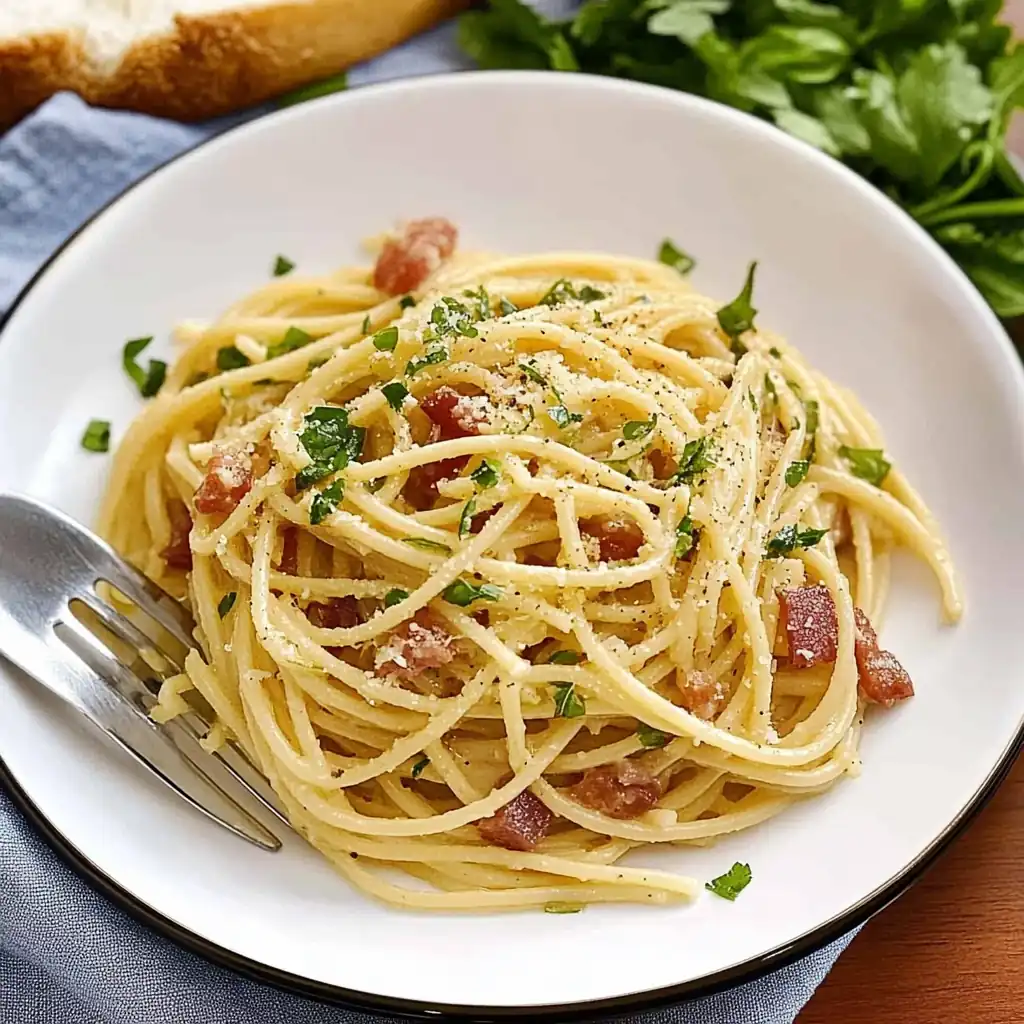
Let me start with a humbling admission: the first time I attempted a Carbonara, I managed to create what can only be described as ‘Spaghetti with Scrambled Egg Chunks.’ In my infinite wisdom, I poured the egg mixture into a pan that was screamingly hot, effectively turning a delicate emulsion into a breakfast omelet draped over noodles. It was a culinary tragedy that taught me the most important lesson in Italian cooking: heat is your best friend, but too much of it is a disaster.
Since that dark day, countless hours were spent obsessing over the precise moment of emulsion to ensure that glossy, velvet-like texture we all crave. The secret isn’t in adding heavy cream—which is practically a crime in Rome—but in the careful marriage of starchy pasta water and tempered eggs. Now, this version is a refined masterpiece that balances the funk of Pecorino with the salty punch of cured pork, creating a sauce that clings to every strand.
- ●No cream is used, relying on traditional technique for a naturally rich texture.
- ●It takes less than 20 minutes from boiling water to plating.
- ●The salty contrast between the pork and cheese creates an addictive flavor profile.
- ●It uses a minimal number of pantry staples for maximum impact.
- ●The silky finish makes it feel like a high-end restaurant dish in your own home.
Essential Ingredients |
Spaghetti provides the structural foundation and essential starch needed to bind the sauce. Substitute with Rigatoni if you prefer a heartier bite that catches more sauce in the ridges.
Guanciale offers a deep, porky richness and a distinct funk that defines the dish. Substitute with Pancetta or thick-cut smoked bacon if you cannot find cured pork jowl.
Pecorino Romano delivers a sharp, salty, and sheepy punch that cuts through the fat. Substitute with Parmigiano-Reggiano for a slightly milder, nuttier flavor profile.
Fresh Eggs act as the thickening agent and create the golden, creamy emulsion. Substitute one whole egg for two extra yolks if you want an even richer, more yellow sauce.
Freshly Cracked Black Pepper adds a woody heat and aromatic bite that balances the richness. Substitute with a pinch of white pepper if you prefer a more subtle, earthy glow.
Let’s Make it Together |
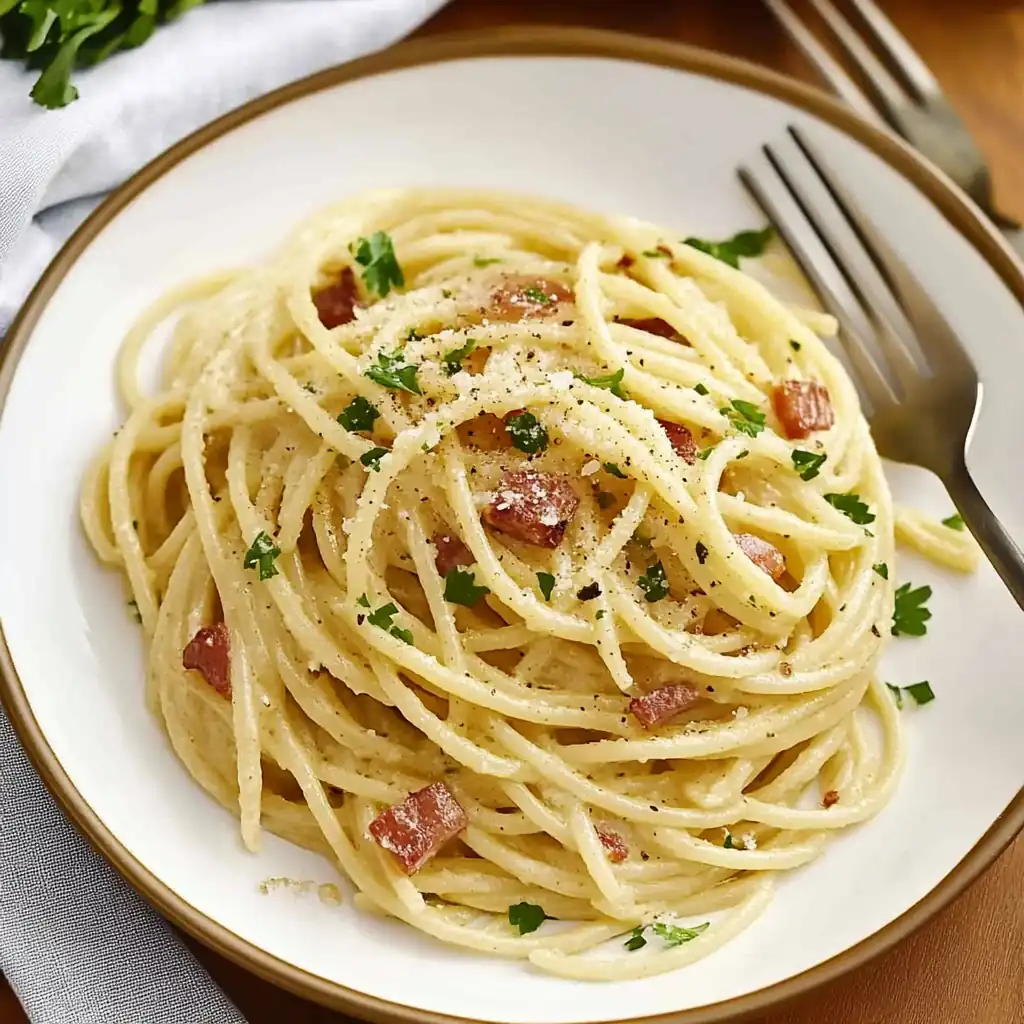
- First things first, get a big pot of salted water boiling and drop in your spaghetti; just keep an eye on the clock so it stays al dente.
- While the pasta is dancing in the pot, slice your guanciale into small batons and toss them into a cold pan over medium heat.
- Once the oil shimmers and the pork starts turning golden and crispy, remove the pan from the heat so we don’t overcook the fat.
- Whisk together your eggs and finely grated cheese in a bowl until it forms a thick, pale paste.
- Carefully move your pasta directly from the water into the pan with the pork using tongs, making sure to bring some of that liquid gold pasta water with it.
- Toss everything together quickly, then pour in your egg mixture and stir vigorously away from the heat to create that legendary creamy sauce.
Never add the egg mixture while the pan is still sitting on a hot burner.
Reserve a cup of pasta water before draining to avoid a dry pasta disaster.
Use a microplane for the cheese to ensure it melts instantly into the sauce.
Avoid using pre-grated cheese as the anti-clumping agents prevent a smooth emulsion.
Ensure your eggs are at room temperature to help them emulsify more effectively.
Perfecting the Cooking Process |
The science of the ‘crema’ relies entirely on the coagulation temperature of egg proteins. Egg yolks begin to thicken around 149°F (65°C) and solidify around 158°F (70°C). If the pan is too hot, you hit the solidification point instantly, resulting in scrambled eggs. The goal is to keep the temperature in that narrow window where the eggs thicken but don’t clump, creating a stable emulsion with the fats from the cheese and pork.
Timing is everything when it comes to the starchy water. The amylose in the pasta water acts as a stabilizer, preventing the fat and water from separating. pasta and pork to the egg mixture off the heat, you utilize the residual heat of the noodles (roughly 180°F) to gently cook the eggs. This gradual heating process ensures the sauce remains glossy and smooth rather than grainy.
Add Your Touch |
For a modern twist, try adding a teaspoon of lemon zest to the egg mixture. This adds a bright, citrusy high note that cuts through the heavy fats and refreshes the palate between bites.
If you’re feeling adventurous, swap the guanciale for smoked salmon and use a mix of Pecorino and cream cheese. It transforms the dish into a luxurious brunch-style pasta that still honors the original spirit of the recipe.
Storing & Reheating |
Store leftovers in an airtight container in the fridge for up to three days. Be warned that the sauce will thicken significantly as the fats cool and the eggs set, making it look more like a pasta cake than a creamy dish.
Reheat the pasta in a pan over low heat with a splash of water or milk. Avoid the microwave, as it will cook the eggs further and likely result in the dreaded ‘scrambled’ texture we worked so hard to avoid.
1Season your pasta water aggressively so the noodles are flavorful from the inside out.
2Toast your black pepper in the pan with the pork for a deeper, smokier aroma.
3Use high-quality bronze-cut pasta for a rougher surface that holds onto the sauce better.
4Allow the guanciale to render slowly to achieve maximum crispiness without burning.
5Plate the pasta on warmed bowls to prevent the sauce from seizing up too quickly.
FAQ |
- ●Q: Why did my sauce turn into scrambled eggs?A: This happens because the pan was too hot when the eggs were added, causing the proteins to bond tightly and solidify. To prevent this, always remove the pan from the heat source and let it cool for a minute before stirring in your egg and cheese mixture.
- ●Q: Can I use heavy cream to make it creamier?A: While adding cream is common in some versions, authentic Carbonara relies on the emulsion of egg and cheese. If you use cream, you change the flavor profile and lose the specific ‘cling’ that the traditional egg-based sauce provides to the pasta.
- ●Q: What is the best substitute for Guanciale?A: Pancetta is the closest substitute as it is also a cured pork product, though it comes from the belly rather than the cheek. If neither is available, high-quality thick-cut bacon works, though the smokiness will be more prominent than the traditional funky flavor.
- ●Q: How do I get the sauce to be perfectly smooth?A: The secret is the pasta water. The starch in the water helps bind the fat from the pork and the protein from the eggs. Adding a tablespoon of water at a time while stirring vigorously creates that silky, restaurant-quality finish.
Irresistible Spaghetti Carbonara: A Creamy Delight
- Total Time: 20 minutes
- Yield: 4 servings 1x
Description
A traditional Roman pasta dish featuring a rich, creamy emulsion of eggs and Pecorino Romano, balanced with crispy guanciale and black pepper.
Ingredients
- 400g Spaghetti
- 150g Guanciale or Pancetta, diced
- 3 large Eggs (or 2 whole eggs + 2 yolks)
- 100g Pecorino Romano, finely grated
- 1 tbsp Freshly cracked black pepper
- Salt for pasta water
Instructions
- Boil spaghetti in salted water until al dente.
- Sauté guanciale in a pan over medium heat until crispy.
- Whisk eggs and grated Pecorino in a bowl until smooth.
- Transfer pasta to the pan with guanciale, adding a bit of pasta water.
- Remove pan from heat and stir in the egg-cheese mixture vigorously.
- Toss until creamy and serve immediately with extra pepper.
- Prep Time: 10 minutes
- Cook Time: 10 minutes
- Category: Dinner
- Method: Stovetop
- Cuisine: Italian